
An aura drawing can be enjoyed as a piece of symbolic or intuitive artwork. Its colors and shapes are not a medical scan, proof of an invisible protective shell or a reliable way to discover what another person is thinking. Knowing that distinction lets you explore the art without giving it authority it has not earned.
You might commission a portrait, draw around a simple outline of yourself or work with colors that interest you. The result can have personal meaning without diagnosing a blockage or predicting your future.
What is an aura drawing?
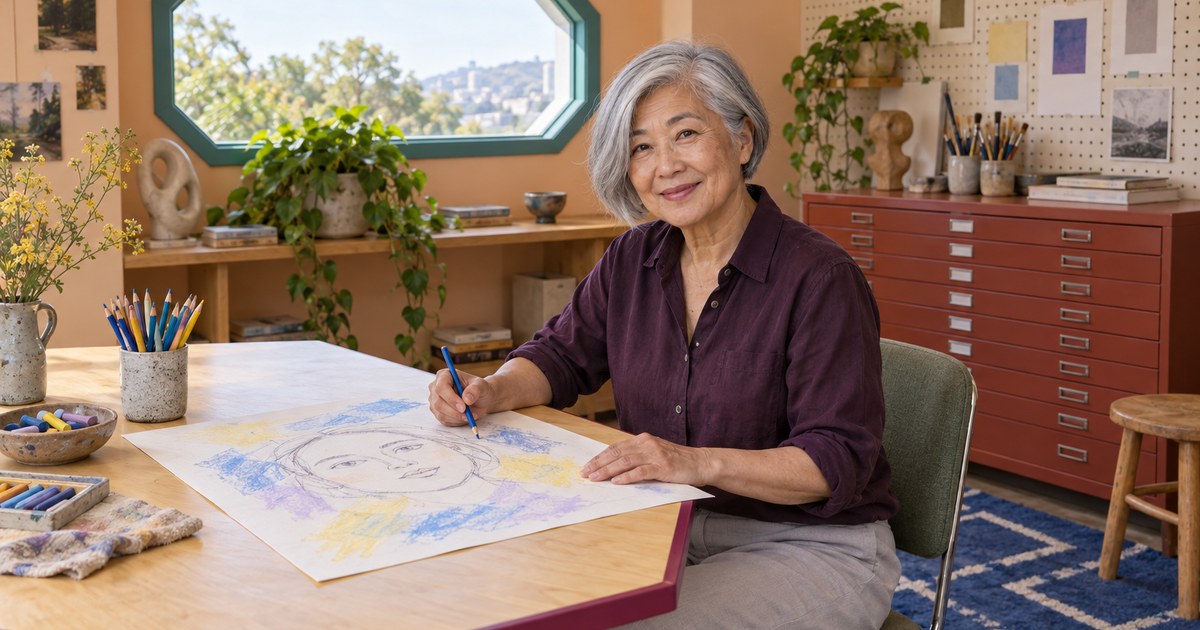
In this context, it is an artwork that uses color, line and symbols to represent an artist’s impressions or a person’s chosen associations. Some practitioners describe those impressions in spiritual language. That description reflects their approach; it does not establish that the image measures a real field around the body.
For a concrete example of the art format, Nana’s Gathering describes pastel aura portraits created from in-person impressions or reference photographs. This documents one artist’s stated process, not a recommendation or evidence for the page’s energy and healing claims.
Ask what a particular service actually produces. A hand-drawn portrait, a modified photograph and a camera-generated color overlay are different processes. A service should explain which one you are receiving rather than relying on the word “aura” to answer that question.
Can someone make a drawing from a photograph?
An artist can use a photograph as a reference. They may also discuss your preferences or describe intuitive impressions. None of that makes a photograph sufficient evidence for diagnosing your physical condition, identifying a spirit or knowing private facts about you.
You do not need to supply a mirror photograph to make a supernatural reading possible. If left and right matter for the artwork, ask whether the artist means the subject’s side or the viewer’s side and whether the reference image has been flipped. That is a practical composition question, not proof that an aura appears in reverse.
Do not send extra personal information merely to help someone “see” you more clearly. A portrait commission does not require your passwords, financial details or intimate images. You can decline a request that does not fit the work you agreed to.
Ask about privacy before sending a picture
The FTC’s guidance on sharing with care notes that shared images can be copied, that other people’s permission matters and that camera features can include location information. Those basic privacy concerns apply even when the purpose feels personal or spiritual.
Before sharing a reference, consider what appears in the background and ask the artist how the file will be handled. Useful questions include:
- Who will have access to the photograph?
- Will it be kept after the artwork is delivered?
- Will the photograph or finished portrait appear in a portfolio or social post?
- Can the work be completed without identifying information or other people in the frame?
These questions are a starting point, not a privacy guarantee. If you are uncomfortable with the answer, you can choose a different reference, make your own drawing or decline the service.
Colors can suggest questions without defining you
There is no need to treat one color arrangement as a fixed map of character or health. Our guide to aura colors and interpretation explains why a symbolic association is not a diagnosis or a verdict about a person.
The following are original creative prompts using colors discussed in this article—not claims about what an aura must contain:
- White: Would I like to leave some space undecided, rather than fill every part of the page?
- Silver or gray: What experience would I like to acknowledge without judging it as good or bad?
- Lavender: What change would I like to explore gently?
- Blue: What gives this particular drawing a sense of direction or balance?
- Yellow: What would I like to notice or pay attention to today?
You can choose entirely different associations. White paint is not a protective barrier, silver is not proof of special wisdom, and yellow near an arm does not establish that someone keeps promises. Look at a person’s actions when judging reliability.
A haze or mark is not a health finding
A gray patch, cloudy edge or dark area in a drawing does not show that someone is feeding on your energy. Nor does its position diagnose a headache, digestive problem, blood disorder or pain in a limb.
If you have symptoms, describe them directly to a qualified health professional rather than trying to decode the page. Do not stop or change medication, restrict food or buy a cleansing session because of a color in an artwork.
The NCCIH guidance on complementary approaches emphasizes discussing health decisions with a professional and not using an unproven approach to replace or delay conventional care. A spiritual explanation does not remove that need.
You also do not have to make the drawing brighter to become healthy or worthy. Dark, muted and empty areas can remain ordinary artistic choices. No crystal treatment is required to “repair” the paper or the person it represents.
Objects and shapes can stay open to interpretation
An orb, crescent or tree can be an appealing element in a picture. A circle might remind you of continuity, a crescent of change, or a tree of something you want to nurture. These are possible personal associations, not universal meanings.
A drawn orb does not prove a protective spirit is present. A tree does not promise a beautiful future, and a crescent does not certify a special connection to the universe. Ask what the image brings to mind for you without treating the answer as an external instruction.
Try an aura-inspired self-portrait, if you want to
This original exercise is for making art, not testing psychic ability or treating a condition. Use whatever drawing materials you already have; you can also work in black and white.
- Choose a simple shape. Draw an oval, a loose outline or an abstract center. It does not need to resemble your body accurately.
- Add a few colors or marks. Choose them because they interest you, not because a chart says they are required.
- Notice your own associations. You might write a separate note beginning “This reminds me of…” No interpretation is compulsory.
- Keep meaning separate from evidence. A feeling about a color does not confirm a medical problem or another person’s intention.
- Finish when you choose. You can keep the picture, change it or put it away. You do not have to meditate until a message arrives.
If the exercise becomes upsetting or difficult to stop, leave it aside and seek appropriate support. A different activity may suit you better.
Before paying for a portrait
Clarify the artwork’s format, delivery arrangements, total cost and whether any explanation is included. Ask whether the interpretation is optional and what happens if the finished piece differs from what you expected.
Be cautious about urgency based on supposed danger, hidden illness or a need for repeated clearing. Our guide to questions about energy-healing claims offers a related way to separate an experience from promises about treatment.
The most useful outcome may simply be an image you enjoy or a question you want to consider. An aura drawing does not need to prove anything supernatural to have a place in your creative life.
Frequently asked questions
Can an aura drawing diagnose an illness?
No. Colors, hazes and their positions are not medical findings. Symptoms and treatment decisions belong with qualified health professionals.
Do I need a mirror photograph for a reading?
No special mirror image is required to make artwork. If orientation matters, clarify whether the artist means the subject’s left or the viewer’s left.
Does gray mean my aura needs cleansing?
No. A gray area in a drawing is not evidence of contamination or a reason to buy a cleansing service. It can remain an ordinary artistic choice.
Can I draw an aura-inspired picture myself?
Yes. You can use an outline, colors and personal associations as a creative exercise. No psychic ability, special materials or message is required.
What should I ask before sharing a photograph?
Ask who can access it, how long it will be kept and whether it or the artwork will be published. Consider other people in the image and any information it reveals.
Do symbols in the drawing guarantee protection?
No. A circle, crescent or tree can have personal meaning without proving a guardian is present or predicting what will happen.
This article seems like a lot of pseudoscience. The idea that aura colors can tell us about our health and emotions lacks empirical validation.
While you have a point about empirical evidence, there’s also a lot we don’t understand about human consciousness and energy. Keeping an open mind can sometimes lead to new discoveries.
Did you know that the concept of auras has been around for centuries in various cultures? It’s intriguing to see how different civilizations have interpreted these energy fields.
So, if I have a gray area in my aura, I just need to meditate and use crystals? Sounds like a plot twist in a superhero movie! ‘Quick, to the crystal cave!’
Oh great, now I need to worry about the color of my aura on top of everything else. Next thing you know, there’ll be an app for aura selfies!
Actually, there are already apps that claim to read your aura through your phone. It’s a strange world we live in!
Fascinating read! The complexities of aura and how it interacts with our environment are engrossing. It’s amazing how colors can tell us so much about our emotional and physical state. Truly eye-opening.